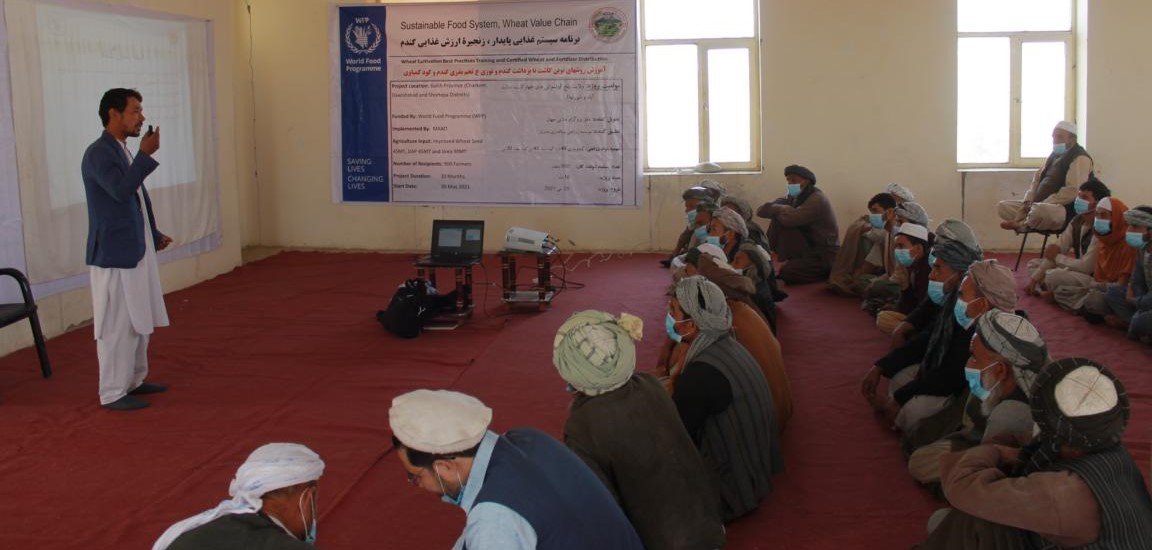
Afghanistan stands in the middle of profound humanitarian crisis from decades of armed conflict, devastating drought, complex migration situation, natural disaster and massive unemployment. Current basic, health, education, economic and employment situation in Afghanistan is disastrous.
According to the United Nations High Commissioner for Refugees (UNHCR), Refugees from Afghanistan were the second largest group by country of origin, significant population since the 1980s to 2018.
At this time in point over 5.67 million Afghans are living in migrant situation, either based in Afghanistan in camps as internally displaced population or in Iran or Pakistan as legal or illegal migrants. Almost all of the population resided as migrants in the neighbouring countries or internally displaced people in different parts of Afghanistan are in dire need for basic essentials such as water, food, shelter, basic health services and primary education (Food and Non-Food Items). While at the same time organizations that work in the areas of providing humanitarian service are working in utmost dangerous situation, their capabilities in provision of humanitarian services are limited by bad and unpredictable security situation, access to remote locations and very limited resources and funding.
Despite the fact that there are numerous limitations, that are many opportunities that saves many lives and improve living situation of most vulnerable population by carrying basic necessary emergency humanitarian services.
In order to contribute to rehabilitation of Afghanistan and to support the most vulnerable population, MAAO in the past twelve years of activism in Afghanistan has been actively working shoulder by shoulder with major multilateral humanitarian organizations and the Government of Islamic Republic of Afghanistan in provision of humanitarian aid to the needy population.
MAAO has actively in the past few years provided food and cash distribution, prevention of malnutrition, sustainable agriculture support, disaster risk reduction activities, and hygiene services to Afghan communities, and internally displaced people, provided winterization services to people living under tents, constructed toilets, and delivered hygienic trainings aimed at reducing malicious diseases. In addition to these, MAAO has also been in the frontline of delivery emergency aid services by implementing numerous emergency response projects in response to floods, earthquakes, landslides and people who have lost their houses after civil war.
MAAO applies SPHERE Project and The Core Humanitarian Standard in implementation of all its humanitarian projects.
MAAO has a pool of existing humanitarian aid permanent expert employees, who are paid by MAAO’s core funds and are deployed as necessary to provide support in response to emergency situations, or residing population i.e. IDPs who need emergency humanitarian services. MAAO is proud to have been in the frontline of responding to emergency services in almost all Northern provinces of Afghanistan in the past twelve years, by implementing the most needed project activities.
Humanitarian Assistance will continue to be a critical area of MAAO’s work in Afghanistan, as the country’s top-level need at this juncture of time. MAAO believes that a well-functioning humanitarian assistance programme can contribute to ensuring that humanitarian assistance, economic empowerment and sustainable development go hand in hand and reinforce each other, and go beyond relief to building long-term resilience.
During the 2015 – 2022 periods, MAAO continues to be a member of the humanitarian cluster (FSAC) in the north of Afghanistan but also will get a membership of similar clusters in central, eastern, western and southern zones of the country.
Copyright © 2025 All rights reserved